
The Benefice of Blenheim
Begbroke, Bladon, Shipton, Woodstock & Yarnton
Every month a member of the Benefice clergy team writes a thoughtful piece for the five parishes and for the wider community. These you'll find below, starting with the most recent.
June 2016
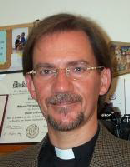
The Associate Vicar writes:
“What is it, Major Lawrence, that attracts you personally to the desert?” someone supposedly once asked T. E. Lawrence, aka Lawrence of Arabia. Lawrence was curiously drawn to the desert for a Welshman who later lived and studied in Oxford. “It's clean,” he whispered. “I like the desert because it’s clean!”
That dialogue is from the film ‘Lawrence of Arabia’, one of my all-time favourites. All three hours and forty-eight minutes of it. I’m attracted both to Lawrence’s daring character, and to his keen love of deserts.
What a marvellous thought. A desert, clean and quiet, and stretching as far as the eye can see. I like my surroundings clean, too—not to mention inordinately well-ordered and arranged.
I’m going to the desert this summer, although not quite as Lawrence preferred it. I’ll follow some other heroes who may be yours, as well, into a kind of desert. Abraham, Moses, St Paul, and even Jesus went, as have monks, friars, nuns and many others, not only to real deserts, but also to the kind that I shall visit.
I am taking a sabbatical. What’s that you say? And even Jesus got one? Yes. ‘Sabbatical’ is a late 16th century term, via late Latin, from the Greek sabbatikos, and means 'of the sabbath'. I’ve had sabbaths most weeks, but never a sabbatical, and mine is technically a couple of years overdue.
Every decade, clergy in the Oxford Diocese are allowed a sabbatical of three months. It isn’t a holiday, or extended rest, although it should include those elements. It is a drawing away from routine work and concerns, as if to a desert, for the purposes of “study, learning, or development, a retreat, and a holiday,” so say the Bishop’s guidelines. Mine will consist largely of writing up research for a new book. I’ve published three projects in a couple of years, including two books of my own, and a chapter in someone else’s, which has just been released … and coincidental to deserts it’s called Abraham’s Dice (Oxford, 2016). I’m excited about my new sabbatical project because it’s more spiritually contemplative in tone than the last several academic ventures.
Which leads me back around to deserts, and to God, and to all of us taking sabbaticals and sabbaths.
Deserts are rich as spiritual metaphors. They evoke images of Jesus and others alone and encountering God, and being transformed. Major Lawrence’s clean deserts are likewise helpful metaphors. Any sabbatical, including the weekly sabbath day that most everyone takes, helps clean our slates of routine duties, and address our essential need for rest and regeneration. Sabbaths also clean our thinking to allow concentration on other matters, perhaps like something creative requiring special focus. And for people of faith, sabbaths especially clean our lives of distractions from God, for the purposes of worship, and for our own spiritual refreshment. That last sense of clean is of utmost importance to us all.
We can all endeavour that every ‘sabbatical’, including our simple but vital weekly sabbath, will include each of these senses. We can then all join Lawrence in liking our own deserts because they’re ‘clean’ in these distinctive ways.
I imagine I’ll be keeping my desert inordinately well-ordered and arranged, also!
Dr Shaun Henson
May 2016
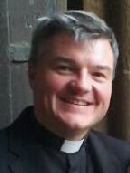
The Rector writes:
Megan and I moved to Woodstock six years ago this month. We find it amazing that those six years have sped by so quickly. Our expereince bears witness to the old adage sure enough: that, when you’re enjoying yourself,
time flies.
There is a small snag though. And here I want to be very personal.
My background is that of a broken home, growing up with one parent, living on benefits in a council flat. We had very little. And when I first felt, at a very young age, the early stirrings of a call to the priesthood, that calling was coupled to a powerful desire to serve in the same kind of environment. Hence, after a curacy in leafy Lichfield, I served on a housing estate in Stafford, a post-industrial parish in Walsall, and then in city centre Coventry.
So here’s the ‘snag’. I have to continually place my sense of calling to urban ministry against the reality of where I find myself. There are times when I hear stories of colleagues from around the country, working in extraordinary situations of poverty and depravation, that induce in me both guilt and perplexity. And there are times I find myself struggling to delight in the loveliness of our commnuites, the friendliness of everyone, the joy that we share in living in one of the most beautiful parts of the country, if not the world.
I share this with you all because recent and forthcoming polls, one intensely local, one more widely so, and one decidedly international, remind me that my ‘snag’ comes from a significant mistake that I make. And that is to regard myself as belonging to one place, rather than to the world. As a citizen of only an earthly Kingdom, when the reality for me, and for all who call themselves Christian, is – or should be - very different.
So in all our decision-making, let us pray for wisdom: wisdom to delight in the present; wisdom to hope for the future; and wisdom to exercise our votes, and make our decisions, not with narrow self-interest, but with an eye to the common good. Or as a famous prayer puts it:
Thy Kingdom may come. Thy will be done. On earth. As it is in heaven.
ADRIAN
January 2016
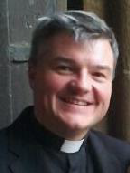
The Rector writes:
Poetry has always been important to me – and is probably more important than ever. I tell the children in our primary schools that ‘poetry is painting pictures with words’, and that seems as good a definition as any.
At New Year poetic thoughts generally swing (that’s a pun, as you’ll see in a moment) in the direction of that great New Year poem of Tennyson:
Ring out, wild bells, to the wild sky,
The flying cloud, the frosty light
The year is dying in the night;
Ring out, wild bells, and let him die.
Ring out the old, ring in the new,
Ring, happy bells, across the snow:
The year is going, let him go;
Ring out the false, ring in the true.
It’s a great text, leading us, robustly, to Jesus
Ring out the darkness of the land,
Ring in the Christ that is to be.
But this year I have come across a new poem that has so lodged itself in my mind that it won’t go away. I’d never heard of Frances Bellerby (1899-1975), but I’m so glad to have discovered her now. This poem, A Possible Prayer On New Year’s Day, is in two sections: the first is a simple three-line prayer to God in a quasi-Trinitarian formula of Light, Word and Truth. The second section is an extraordinary contrast – it asks the God who is Light to grant shadows, both as evidence of his own inextinguishable light, but also, perhaps, as evidence of his transcendence.
To the Light now invisible
Word now inaudible
Truth now unknowable
Pray for the appearance of shadows
Before this New Year’s Night.
For shadow trees on the cold null meadows,
Proof of the sun’s light.
And pray for each shadow to be delicate and precise
as its tree.
Now and in memory.
The year ahead is likely to have shadows for each one of us – bereavement, illness, pain, poverty. Not something to look forward to. But this poem can help us see those shadows differently: as the inevitable cost of dwelling in the Light. I hope it might be so for you in what, I hope and pray, will be a year full of His Light now visible, His Word now audible, and His Truth now knowable – because of Jesus.
Adrian
June 2015
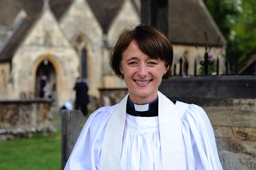
The Curate writes:
I can’t believe it has been four years since my ordination at Christ Church Cathedral and I joined the Blenheim clergy team. The time has flown by and now we need to move on to pastures new as my curacy training has come to an end.
I cannot imagine a better place to train in the whole of the Church of England! We have loved our time here and have been welcomed, encouraged, supported from the moment we arrived. There have been so many wonderful memories made and if I had to condense them the highlights would be: Campsfied Choir, junk modelling with Messy Church, being superwoman for Children in Need, church picnics, singing in Spencer Court, candle-lit processions, assemblies in the wonderful schools, debates and discussions around breakfast and pizza and lots of coffee and cake. One of the things I am most proud of having been part of was the Passion Play last year, and I will always remember that beautiful spring day when Woodstock was transformed into Jerusalem and the community came together to recreate the Easter story.
Many of you have asked me where we will be heading to next and thankfully we can now announce that we will be returning to the place where I was ordained! I have been appointed Chaplain and Welfare Co-ordinator for Christ Church, Oxford. This is a very exciting opportunity for us and we are delighted that we won’t be moving too far away and so will be able to keep in touch.
Thank you for your friendship to me and my family over the last few years. Our final service is on Sunday 7th June at 11am at St Mary Magdalene’s Church in Woodstock and we’d be delighted if you could come to see us off.
The word ‘Goodbye’ comes from the phrase ‘God be with you’ and so as I say goodbye I will pray that God would be with you. I hope you can pray the same for us! God be with you.
Revd Clare Hayns
March 2015
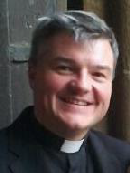
The Rector writes:
Each year I like to remind everyone that LENT is the springtime of the church’s year, the time when the church, with the rest of our part of the world, moves forward into longer (Lent-er) days.
Last year I listed six really good habits to get into. I wonder if you did any of them? They are, I hope, worth repeating:
1. Look inside your heart. See if there’s anything that shouldn’t be there and sort it out. See if there’s anything that should be there, but isn’t, or is neglected.
2. Pray. Once a day. Be quiet, pop into church, be still at home, take a walk in the park, use your Bible, or a favourite book. You’ll notice the difference.
3. Fast. Not to slim, but to be in solidarity with the hungry. Give up one meal a week. Give the money you would have spent to the Foodbank, or Christian Aid.
4. Give. Or if you give already, give more. To your church. To charity. Be generous. It feels good, I promise.
5. Read your Bible. If you haven’t done it before, take a Gospel and read it a chapter a day. There are loads of leaflets and guides in church, come and help yourself.
6. Repair broken relationships. Our families and communities are full of these. ‘I haven’t spoken to him since’. ‘I can never forgive her for what she did’. I hear it nearly every day. It needs sorting, because it’s eating you up inside.
I repeat them purposely, because if we did all these things, then our communities would be different places. If Lent is the church’s springtime, then it means we merit a spiritual spring clean, a good look at ourselves, to see if we’re really happy with what’s going on, and daring to turn around (in churchy language, repent) and be different.
You must have noticed the difference the beautiful weather made to how you felt last month. The sun emerged, it was briefly warm enough even to sit outside. The snowdrops and crocuses lifted our hearts with their gentle evocation of the coming spring.
How much more will you feel the difference if you allow the warmth of God’s love to shine in your heart. In these precious weeks of Lent, take that good look at yourself, and dare to invite God in.
I promise: you won’t regret it.
Adrian
February 2015
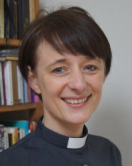
The Curate writes:
Over the past year we have been collecting unwanted beads and buttons which have been sent out to a little project in Zimbabwe where a group of women have been using them to create new and beautiful necklaces and bracelets. These were then returned to Woodstock to be sold and the money returned to the women to support their families. From the unwanted and seemingly useless old bits and bobs that we were able to give new things have been created and lives have been changed.
Most of us don’t live under any illusions that we can change the world, but although we can’t do everything, we can do something. This morning I spoke to an older lady who lives on her own who was delighted that her neighbours had taken twenty minutes out of their Christmas Day to pay her a visit. Each week I take my son to Cubs where volunteers give up their time to teach him about knots (they really do learn this!) and the value of caring for others. Our churches look so beautiful because people quietly, without fuss, come along to polish, dust, tend to the flowers and weed the churchyard.
We are so busy now though and the days where we had loads of time to volunteer are sadly gone. But there is value in giving what little we have because I always find that when we do this, we receive so much in return. Each of these little acts are like a bead that is then taken to create something beautiful.
There is a lovely bible story in Mark where the rich were throwing money into the temple collection plate when a widow put in two small coins, worth nothing. And she was commended by Jesus for her generosity because she gave all she had. There is a lovely story of a man who comes across a beach full of starfish who had been separated from the sea. He picked one up and threw it back out to sea. His friend derided it as a waste of time as there were so many other starfish. ‘It wasn’t a waste of time to that one starfish’, he answered.
Each little act of generosity, love and care makes a difference to someone. This month we are entering into Lent where many Christians take some time out to deepen their relationship with God, and many do this by giving something up. Perhaps giving up some time to help others could be part of this.
Even the tiniest bead can used to make up the most beautiful necklace.
Revd Clare Hayns
January 2015
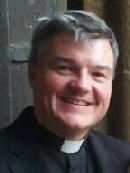
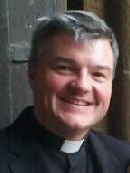
The Rector writes:
The Rector writes
In 2014 Megan and I celebrated our 10th wedding anniversary, with a splendid service where we renewed our marriage vows, and a lovely party. ‘Only ten!’ one or two people cried ‘why make a fuss about ten?’. Well I think any excuse for a party is a good one. More profoundly, loving relationships that last and deepen are worth celebrating, no matter how long they’ve been going for. We’re so glad that we did it (incidentally, if you want to renew your vows this year, get in touch with me).
Anniversaries matter. They provide milestones for individuals and communities. In Christian terms, they provide an opportunity to thank God for His grace and goodness, to reassess our relationship with Him, and to seek His guidance for the future.
2015 has two important local anniversaries.
This month marks 50 years since the death of Sir Winston Churchill. Members of his family will be joining us for a quiet service of remembrance, and, at the end of the month (the fiftieth anniversary of the funeral) a memorial peal will be rung from the tower at Bladon – that’s 1pm on January 31st. A documentary about Bladon church and its visitors is being broadcast on Radio 4 (that’s scheduled for January 23rd) and there will be a lot on TV too. A number of events will be taking place during the year. Excitingly for us at St Martin’s we have received Lady Soames’ Garter banner, which will be installed in church at the end of this month – do make sure you come and see it. Even more exciting is the installation of anew stained glass window in commemoration of the anniversary of his death. You can see the design, and contribute towards the cost, by going to a special website: http://churchillwindow.weebly.com/ .
And the other anniversary? In Woodstock we will be celebrating 75 years of The Marlborough Church of England School. There will be lots of special events and celebrations, including a big service later on in the year. The Marlborough, like our primary schools, gives so much to us as a community. It goes from strength to strength under Mr Hanlon’s direction, building on the foundations laid by Mr McConnell and Mrs Fenn. At a time when schools (especially church schools) get a lot of stick, I am proud and grateful that we have, here in Woodstock, church schools that are not selective because of faith, but are profoundly inclusive, serving the whole community and the local area.
Anniversaries matter. We will all have anniversaries this year – some will be joyful, like the ones I’ve mentioned. Others will be poignant, or even painful. Use them well. Take time to reflect on your journey through life, and see if you can discern where God has been at work, and where He is leading. Let His amazing grace fill you, and change you, in 2015.
Happy New Year!
Adrian
June 2014
The Curate writes:
It’s exam season!
Just as the weather becomes gorgeous and the promise of holidays begins peeking over the horizon, many households are a hotbed of anxiety and stress. SAT’s, GCSE’s, A’ levels and degree course finals. A friend with four children, all taking different exams at the same time, tells me that they all react differently: one doesn’t sleep at night; one eats constantly; one stresses out the others, and another is totally relaxed. As teachers and parents we try to encourage our children to do their best, without over-stressing them. It’s a delicate business.
It doesn’t end when we leave school or university. Many of us are examined in some way or other throughout our lives. As part of my curacy I have to submit a huge portfolio of work to show that I am ‘competent’ by the end of my training.
Although I complain about this at times, it has reminded me how good it is to keep on learning throughout our lives. Does this ever need to stop? A great friend of mine, aged 89, undertook a computer course in order to keep up with her great-grandchildren on Facebook! It is the same for our faith. So many of us stop developing and growing in our faith in our mid 20’s. Life gets busy, things get in the way, and we find we haven’t read or thought seriously about faith for years.
Last Saturday, as part of my training, I spent the afternoon in a bible study at the Oxford Synagogue in Jericho. A group of Curates and Rabbi’s studying together, joined by several others from the Jewish community. We were humbled by the Jewish expectation of life-long study amongst children and adults.
Of course developing our faith is not just about reading and studying but it is an important element. A good start is to come along to one of the groups going on, such as the Thursday Group, the Thomas Group, or the Pilgrim Course. Details via www.beneficeofblenheim.com
Thankfully, we won’t ever be examined on it though, not even at the Pearly Gates!
Clare
March 2014
The Rector writes:
Dear friends
Thank God that Lent has arrived – the springtime of the church’s year, when hopefully the greyness and the wetness of 2014 thus far can be put behind us (though the snowdrops were wonderful). Now we can move forward into longer (Lent-er) days.
Lent needs to be used. It’s no good just being aware of it and doing nothing. It requires action. And I have not one but SIX suggestions for you, based on something written by Sam Wells, the Vicar of St Martin in the Fields in London. Here are six habits to get into:
Look inside your heart. See if there’s anything that shouldn’t be there and sort it out. See if there’s anything that should be there, but isn’t, or is neglected. I, or any of my colleagues, will be only too glad to help. Be brave and do it.
Pray. Once a day. Be quiet, pop into church, be still at home, take a walk in the park, use your Bible, or a favourite book. You’ll notice the difference.
Fast . Not to slim (though that will be a good side effect for me) but to be in solidarity with the hungry. Give up one meal a week. You could give the money you would have spent to the Foodbank, or Christian Aid.
speaking of which . . .
Give. Or if you give already, give more. To your church. To charity. Be generous. It feels good, I promise. I know things are tight – they’re tight for charities and churches too. We need each other right now.
Read your Bible. If you haven’t done it before, take a Gospel and read it a chapter a day. There are loads of leaflets and guides in church, come and help yourself. Or get in touch and I’ll point you in the right direction.
Repair broken relationships. Our families and communities are full of these. ‘I haven’t spoken to him since’. ‘I can never forgive her for what she did’. I hear it nearly every day. It needs sorting, because it’s eating you up inside. Lent is a good time to get these things fixed once and for all.
So this Lent, focus on what really matters. Get back to the essentials. Make time for God. Come to church too, there’s loads on. Discover why, once you encounter Jesus for real, you’ll want to know him more. Not only in Lent. Always.
Adrian
February 2014
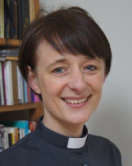
The Curate writes:
In the last few weeks I’ve asked a dad in the school playground if he’d like to be a disciple, I’ve commissioned a local carpenter to make an 8ft cross and have booked a donkey. We’re gearing up for the first Woodstock Passion Play.
A ‘Passion Play’ is a re-enactment of the Easter story, taking in the final days of Jesus’ life, death and resurrection, and traditionally taking place outdoors with the audience moving to follow the action. They are not new and in fact date back to medieval times where they were called Mystery Plays, and were originally a way of communicating to a mainly illiterate population. The German town of Oberammergau have staged such a play every ten years since 1634.
In recent years Passion Plays have been having a resurgence with hugely successful community plays such Wintershall (Surrey), Leominster (Herefordshire) and, closer to home, Abingdon. Even The Archers is now putting one on!
The Woodstock Passion Play (April 13th 2014) is a bold and exciting venture that has been instigated by Churches Together and will involve the whole community. We will be using the town of Woodstock to recreate Jerusalem and the action will move between the town square, the library gardens and St Mary Magdalene’s Church. We have a super director (Katie Read) and all the cast are local people and we’ve been amazed at the wealth of talent around.
There are lots of ways people can get involved in this. We still need soldiers and disciples and are putting together a children’s and adult choir. We also need people to help with set and costumes. Above all we will need an audience so please put the afternoon of April 13th in your diaries and tell your families and friends about it. www.woodstockpassion.org
ADRIAN
January 2014
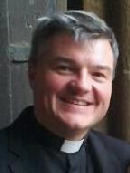
The Rector writes:
To be honest, I don’t much like January. I should, by rights, be full of expectation for all that a New Year is going to bring – after all, God is no less good in this month than any other, and his love no less real.
And yet January feels like an anti-climax after Advent and Christmas: which here in Woodstock and Bladon is a very happy but very exhausting time.
There’s a personal dimension too. Since 1991, January has been the month of my mother’s death. So there is darkness in my soul, as well as in the sky, at the beginning of every year.
When you were in church this Christmas, and had the ears and eyes to notice, you will have detected darker themes alongside the star, the angels, the shepherds and the manger. U A Fanthorpe’s poem ‘The Wicked Fairy at the Manger’, gets this exactly right
My gift for the child:
No wife, kids, home;
No money sense. Unemployable.
Friends, yes. But the wrong sort –
The workshy, women, wogs,
Petty infringers of the law, persons
With notifiable diseases,
Poll tax collectors, tarts;
The bottom rung.
His end?
I think we'll make it
Public, prolonged, painful.
Right, said the baby. That was roughly
What we had in mind.
The faith that I hold, and that Christians believe in, is not a magic spell that makes badness and sadness go away. It is a way of life that makes sense of the badness and the sadness. It does this with an extraordinary claim: that God came, decisively, into our space, our flesh, our blood, to deal with this stuff once and for all. Not by taking it away – that would leave us with something less than life (which is hard to get your head round when life is desperate, but is nevertheless true).
The story of Jesus is one which makes sense of life. It’s not a stiff drink to bring momentary relief, or a drug to make reality briefly bearable. It is a story which takes pain, death, bitterness, frustration and grief, and nails it all to a cross, buries it inside a borrowed tomb, and bursts into new life because of the power of love.
I hope that you had a great Christmas. But I know first-hand that many of you didn’t. The blood-red berries and the pin-sharp thorns were more than decorations, but symbols with real meaning. I know.
So in January’s darkness, look to the story of Jesus to find some light. Let’s help each other to hope and believe, while we wait for the Spring.
ADRIAN
December 2013
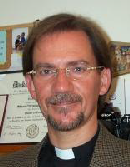
The Associate Priest writes:
What’s in a gift?
Imagine someone shouting in the streets during any peak shopping season, ‘What’s in a gift?!’ Surely someone would respond in kind with, ‘What sort of question is ‘what’s in a gift!?’ Well, it’s a very good question for December, as a great holiday not unrelated to gifts quickly approaches. Christmas is coming, and let’s be honest: we all like gifts. Giving them is great fun, too. ‘What’s in a gift?!’ asks about the purpose and meaning of all this gift-giving.
People wonder whether during Advent and Christmas the Church should even mention gifts. Yet as Archbishop Justin Welby has wisely noted recently, if he were to suggest that people should stop giving Christmas gifts, no one would listen. His real concern is not with gifts, of course, but with going into great debt while giving them. The Archbishop means to suggest that giving and receiving gifts is a great way to express love, but that giving more modestly and seeing gifts as tokens of a deeper love and affection is the right approach.
Wise man, indeed, Archbishop Justin. Christmas is, and we could say always has been very much about gifts. Christmas is about a gift of love from God. God started it all.
‘What’s in a gift?’ might also mean, ‘What’s in that fine-looking box with my name on it?’ Often what’s actually in a gift is what we want and maybe need, like warm socks in winter.
‘What’s in a name?’ sounds like another strange question. And yet any child knows that gifts can have names. God’s original Christmas gift to the world has a name, too: Jesus. Jesus also has other names, which we may hear this month: ‘Wonderful Counsellor,’ ‘Mighty God,’ ‘Everlasting Father,’ ‘Prince of Peace,’ and ‘Emmanuel’, meaning, ‘God with us’. St. John wrote of Jesus as ‘The Word’, ‘The Light’, and even ‘God’. Humble shepherds heard, ‘Behold—a Saviour: Christ the Lord!’
That Jesus has so many names shows how special God’s gift of love is for us, and just how much there is about him to consider.
‘What’s in a gift?!’ and ‘What’s in a name?!’ Jesus is unique in being both a gift and a name. That’s why the Christmas season has always been about gifts, rightly considered.
Christmas is about God’s gift of love to the world in Jesus. And Jesus is what we really need, and deep down really want in our lives, bringing God’s very presence into ours.
Let us this Christmas as we give and receive gifts ponder these wonders, asking ourselves afresh with joy and expectation about God’s gift of love for us—and with us.
What astonishing thoughts worthy of festivities!
Shaun
November 2013
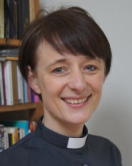
The Curate writes:
Perseverance is an underrated value.
My husband John is a juggler and he spent most of his teenage years throwing balls up and down trying to master the art. He tells me that juggling is 90% perseverance and 10% skill. I spent a while attempting to learn many years ago but gave up after a few attempts.
Children are masters at perseverance. They learn early on that anything worth doing takes time and practice. Learning to walk, to read, write and spell takes them hours of practice and time. They learn that making mistakes is part of the process and aren’t afraid to fail a few times.
I gave up learning to juggle because I really didn’t care about it enough. We persevere with things we really believe in or value don’t we? If we don’t care about the outcome we don’t bother. Jesus speaks about perseverance to his disciples when speaking about prayer. He says ‘Pray always and do not lose heart’ and tells a story of a widow who, in the face of injustice, bangs on the door of an unjust judge who eventually relents and grants the widow justice. ‘How much more’, he says ‘will God grant justice to his chosen ones who cry out to him day and night’.
If we are honest, prayer sometimes feels like banging on a door that seems to be shut. It’s easy to lose heart in our prayer life. We may start off with enthusiasm, but then difficult times come; our prayers don’t get answered quickly enough; life is still difficult; there is still injustice in the world.
What is it that we care about so much we are willing to persevere and to keep banging on the metaphorical door about? It might be a loved one who is sick or in trouble; a difficult job situation; an injustice in the world that makes us mad with frustration. Jesus says to his disciples, ‘Pray always and do not lose heart’.
There is a lovely quote that says: "when the world says, 'Give up,' Hope whispers, 'Try it one more time.”
Clare
October 2013
The Rector writes:
Let there be peace on earth
Over the last few weeks I’ve been having a lot of conversations with you about the situation in Syria. I know how many in these communities feel moved by the pictures we see on TV screens, and see in our newspapers.
Autumnal Bladon and Woodstock are light years away from the burning flesh and bloody streets of Syria. But, as human beings, made in the image of God, our sense of compassion kicks in. Deep down there is a sharing in the agony we sense going on in the lives of fellow human beings thousands of miles away.
We want to do something, and feel helpless. We share the perplexity that political leaders have clearly demonstrated as they struggle to respond in the right way.
What can we do? Well, we can give generously to charities who are supporting the injured and the bereaved. All of us can pray – and if the words are hard to find, the Church of England website can help you if you go to http://churchofengland.org/prayer-worship
But there are things we can do to make the world a more peaceful place, simple things. They won’t directly affect the situation in Syria – but they will have a direct effect on the life we share in Bladon and Woodstock. We can choose to be kind. We can choose to avoid being nasty, bitchy, spiteful. We can avoid judging others. We can seek to recognise the image of God in our friends, and neighbours – even our enemies.
And we can seek to find peace in our own hearts. William Hazlitt (1778-1830) famously remarked ‘Those who are at war with others are not at peace with themselves.’ He was spot on.
So let’s us be those who strive for peace: yes, in Syria, but also here in Woodstock and Bladon, and deep down in our own hearts. The old song sums it up perfectly:
Let there be peace on earth
And let it begin with ME.
ADRIAN
September 2013
The Rector writes:
It’s Good to be Back
Dear friends
A thousand thanks to everyone in Bladon and Woodstock who have given Megan and I such a wonderful welcome home following my time in Montreal. The sabbatical has been a time of great inspiration, fascination and refreshment, and I have returned full of gratitude to you all for your support and encouragement for my study leave, whether that support was prayer, money, cards, letters, emails: all of it was plentiful, generous and lovely. I plan to make an illustrated presentation of my time in Montreal on Sunday 15th September at 4pm which I hope you will come to. The experiences that I had, and the lessons learned will, I hope and pray, flow over into my ministry, and our shared life and witness, for months and years ahead.
The Anglican Church in Quebec is very similar to us in terms of worship, but so much else is different. The Cathedral's Sunday attendance is about the same as Woodstock's, and is the biggest congregation in the Diocese of Montreal. The diocese of Montreal has a total population of 3 million, and there are around 9000 Anglicans, and about 70 clergy. Compare that to the diocese of Oxford, with approximately 2 million population, around 60,000 Anglicans (that's just adults attending on Sundays), 800 parishes and 400+ clergy, and you'll see how different things are.
Many clergy and congregations out there are gloomy about the future, and we need to hold them in our prayers. The decline of the church in Quebec is a complicated story, and how the churches can win the hearts and minds of a disillusioned people is a hard one to predict.
Our story is different. At a time when the national news suggests that the church is a dying institution, we have a very different tale. Congregations in Bladon and Woodstock are increasing, and that’s a trend across Oxfordshire. I’ve been delighted to meet a number of new members of our congregations who have joined us over the last few months who have spoken about the warmth of welcome and sense of community in our churches. I thank God for that. Why not come and join us?
ADRIAN
August 2013
The Reverend Nathan Jarvis writes:
"Prayers and Parties"
This was a phrase often used by +Jack Nichols, onetime bishop of Sheffield. By this, he was trying to describe the work of the church, and how it is experienced by those within it. It serves just as well today, and at a local level. The next few months seem to be filled with all sorts of activities all involving fun, celebration, laughter, food and wine. Prayer and parties in Yarnton and Begbroke are in full swing!
The church can sometimes be seen as a relic from the past, or a depository of history and tradition, all things which I am happy to be associated with. It is also a lively and lovely place, filled with great men and women who are here to worship God, but also to have a good time. Does that sound odd? When you think of church, do you think of having a good time? Look round many congregations, and often blank expressionless faces look back at you. Not here. We take our praying seriously, and our partying. I make no apology for this, for this is what Jesus wants.
When an archdeacon once chastised me for having wine after a large service (in my old diocese), I pointed out that Jesus first miracle was turing water into wine, not something he would have done had he been disapproving of the odd tipple and a party. He knew what fellowship and friendship was all about. He knew that in order to get to know someone, you have to break bread with them, share a glass of something tasty, and enjoy what we Christians like more than anything, a good old natter, sharing stories and fun. Getting together and growing together is what we are all about.
As I write, I am thinking of all those who were confirmed and baptised at Woodstock church a week or so ago, our placement student Rebecca, moving into here last year and thinking about where to go as a curate. Things are moving, things are growing, bit by bit. We have welcomed our new friends into an international church that has its issues, that is suffering growing pains, just like all community groups and organisations at this time. There will be times in the future when our new members wonder what it’s all about, when doubt creeps in, or a nagging voice takes over. The moment when all this is swept away is when we are joined by God’s Family as we celebrate the Eucharist in one of our wonderful churches that make up our Benefice.
As I look at the faces of my parishioners (and I can now see them, thanks to moving the altar in Yarnton), I see a group of friends, some of whom are in church because they are curious, some because they are exploring discipleship, and some because they enjoy a good sing song. Some have been coming to church for decades, and some are new to faith. We are all there because we all enjoy being part of a community.
When Jesus got his mates together, sat on the seashore, cooked on an open air BBQ and had a good old time, he was setting us an example. Surely, if he could come to out lovely church, he would be pleased with what he saw?
Nathan
July 2013
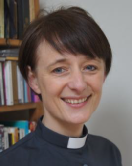
The Curate writes:
Musical Statues
One of my favourite childhood party games was musical statues. You know the game. You dance like a loon for several minutes and then have to stay as still as possible, normally in a silly pose until you’re out for wiggling. I always found the staying still bit the hardest and needless to say I was always first out of the game. Those who know me will testify that stillness is not my natural position.
This week I spoke to the children in our primary schools about ‘being still’ and we played that game. We also spoke about the importance of times of quiet in the business of life, and we thought about the special places where we like to go to think and pray. The children found that they like to do this in all sorts of wonderful places: under the bed, in a tree house, on a special window ledge, in a tent whilst camping. It reminded me that when I was young I used to climb a big sycamore tree in our garden and sit in one of the branches where I could have some peace and quiet away from my 3 siblings.
We all need times for reflection and stillness, even those of us who are not natural contemplatives. There is a wonderful passage in Mark’s gospel where Jesus gets up early to go to pray and the disciples all hunt for him and when they find they exclaim, ‘everyone is looking for you’!
I have found that these last few months have been rather busy, and finding times for reflection and prayer is hard. There is always more to be done, more people to see, a cleaner house to be had, but what is the point of all the action if it isn’t rooted in prayer, and in God?
There is a wonderful, rather challenging quote from Maggie Ross ‘Pillars of Flame’ about this:
‘Action which does not derive from stillness is mere technique and diminishes the lives of those acted upon’.
So where do we find times for stillness and prayer? Where do we allow space for the music to stop and to stand still? Perhaps it’s not in a tree house anymore, but it might well be in the beauty of the garden, or in a special chair looking at a lovely picture.
Clare Hayns
Curate
June 2013
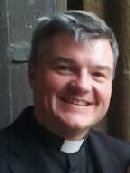
The Curate writes:
"I come from there and I have memories
Born as mortals are, I have a mother
And a house with many windows,
I have brothers, friends,
And a prison cell with a cold window."
Immigration is a hot topic at the moment. Every time you put on the news, pick up a paper and listen to the radio, someone, somewhere is giving their opinion about it. Debates about border controls, asylum laws and the pros and cons of immigration are important and necessary, however we can often forget that behind these discussions are human beings: people like us, with hopes, dreams, fears and aspirations.
This realisation came home to a group of us last month when the local parish churches were invited by one of the Chaplains at Campsfield House (the immigration detention centre in Yarnton), to form a choir to go into the centre to sing during their diversity week. A group of 25 of us got together, and we went with some trepidation not knowing what kind of reception we would receive. Would the 200 men who live there enjoy listening us sing our traditional hymns and songs, or would we be booed off stage? We weren’t by any stretch of the imagination a professional-standard choir!
In fact we couldn’t have had a warmer, more welcoming reception. The unifying power of music and laughter meant that the racial, cultural and language barriers between us didn’t matter: the detainees joined in with our songs and we were treated to solos in Punjabi and Zulu. We were able to let them know that even though they are detained behind walls and wire, they are not forgotten.
Remember them as you drive past Campsfield House on your way to and from Oxford, and perhaps you might like to say a prayer for the men who live there and the staff who work there. Whatever your views on immigration and asylum, most of the men there are frightened, confused and desperately lonely.
"I am from there. I am from here.
I am not there and I am not here.
I have two names, which meet and part,
and I have two languages.
I forget which of them I dream in."
Mahmoud Darwish 1941 – 2008
Clare Hayns
Curate
May 2013
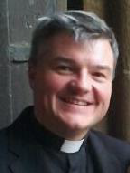
The Rector writes:
Dear friends
FAREWELL – BUT NOT FOR LONG . . .
After 10 years of continual ministry, every priest is entitled to a time of extended leave for academic study, extended spiritual retreat, and a bit of a break. That time for me was meant to begin on April 1st, but due to illness in the team I stayed put! But now all is well again, and so by the time you are reading this, I shall be on sabbatical.
I am very glad to be able to do this at a time when the clergy team is strong, lay leadership is getting stronger, and our churches are in good heart. This will be a great time of training and experience for our wonderful curate Clare (as it was for me when, as a curate, my boss took a sabbatical) and she will need your support and your prayers – and patience too! I know that together you are going to have a very good few months.
During May I shall be doing some research for a Masters’ degree and attending lectures and classes in Oxford. Then in June I go to Montreal, as a guest of the Bishop and the Cathedral, where (it gets a bit technical here) I shall be learning about the nature of the relationships between church and the wider community (Anglicanism in a non-Established context), ministry of outreach to different socio-economic groups, organizational issues (Episcopal, Decanal, Archidiaconal ministry in the Diocese, and the relationship between the centre and the parishes – together with the correspondence between ordained and lay ministries).
In other words, comparing how they do church to the way that we do church here!
I return to hit the ground running at the end of July, and look forward then to sharing my experiences with you, and continuing my ministry here.
For to be a minister of the Gospel here, in these parishes, is to be blessed indeed. Thanks be to God for all that he has given, and goes on giving, to us, and through us.
With my love and prayers
Adrian
Canon Adrian Daffern
The Rector writes
Alleluia Christ is Risen!
A very Happy Easter to all of you. I hope, by the time you’re reading this, that is really feels like resurrection is all around. It’s been a long, grey winter. We need some spring weather. We need some Easter weather.
It feels like there is Easter weather in the church. In Rome there is a new Pope, a humble man, celebrated for his simplicity of lifestyle and compassion for the poor. Here at home we have a new Archbishop, a man of extraordinary gifts, proven courage, spiritual depths - and he is worldly-wise to boot.
The appointments of Archbishop Justin and Pope Francis are exciting, and are signs that the Spirit is at work in His Church. We believe that the very same Spirit is at work in the church here in Woodstock too. There is Easter weather in St Mary Magdalene’s – new people, new initiatives, new understandings of God, new ways of being disciples. A newness which comes from belief in a God who is alive, always ahead of us, leading the way, drawing us ever nearer himself.
R.S. Thomas (1913-2000), one of my favourite poets, writes
. . . He is such a fast
God, always before us and
leaving as we arrive.
I, and many like me, would recognize the truth of these words. For some, they will be words which confirm the reality of spiritual experience. For others, they will confirm what they have always imagined – that God (should He exist) is elusive, unobtainable, aloof.
The Christian Faith says that the opposite of this is true. That our God was human. That our God was real.
That our God was crucified. That our God is alive for ever – scarred, but alive for ever.
At St Mary Magdalene’s we would love you to come and enjoy some of the Easter weather that is bringing us so much joy. Come and find out what it feels like to catch up with such a fast God.
And if that feels like a step too far right now, at least enjoy some more words of R. S Thomas, a poet (and priest) for whom faith was never easy, but never died:
. . . There have been times
when, after long on my knees
in a cold chancel, a stone has rolled
from my mind, and I have looked
in and seen the old questions lie
folded and in a place
by themselves, like the piled
graveclothes of love’s risen body.
Canon Adrian Daffern
Dear friends
As I write Lent has just begun – a season which realigns us and enables us to focus on what really matters. A time which recalls us to the essentials. Wilderness time, when some of the daft things that we sometimes think about God, about faith, about life, can be put into perspective.
I’ve given up alcohol, amongst one or two other things, and there don’t seem to have been any ill effects thus far. I am trying to take on some more prayer time, be slightly less obsessed with emails (I get about forty a day – how did that happen?), and make some real space for God.
Another thing that we’re trying to do is not be wasteful. I was shocked to discover a few weeks ago just how much food is wasted in the world. The figures for this country alone are horrifying: in Britain, about 4 million tonnes of food is completely wasted, 1 million tonnes of which wasn’t even taken out of its wrapping. All of which mean the average Briton wastes 247lbs (that 112kilos) a year. 359,000 tonnes of potatoes (all edible); 328,000 tonnes of bread, 200 million rashers of bacon, 1 billion tomatoes, 4.8billion grapes.
Set those statistics against the fact that, just over every three seconds, a fellow human being dies of starvation, and we realize that something must be done.
We can all help – shop wisely, don’t waste, buy Fair Trade goods, support the Foodbank, do some fasting this Lent and give the money you saved to Christian Aid, or one of the other excellent aid organizations.
Food is a spiritual issue. Because our world, I believe, in its amazing variety, wonder, in all that science reveals to us in countless new ways on an almost daily basis, was given to us by God. And He has given us a world which produces enough food for everyone on the planet to have enough to eat. Yes, the developing world, where people are hungry, need to learn better farming practices, better methods of storage, need better infrastructure so that food gets from the field to the marketplace. But that doesn’t give us the excuse to throw good food away.
So this Lent, focus on what really matters. Get back to the essentials. Make time for God.
And be hungry: hungry for justice.
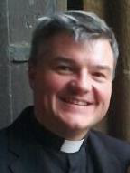
Adrian
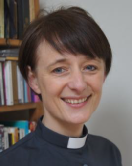
As I write this the snow is falling, the schools have closed, and we’ve just enjoyed an afternoon sledging in Blenheim: there can’t be many more beautiful places to sledge in the whole of the UK!
By the time you read this no doubt the snow will be a distant memory and we will be looking forward to the first signs of Spring, and Easter will be just around the corner. We will be in Lent: those 40 days before Easter where we remember Jesus’ time in the desert and where we pray for those around us going through ‘desert’ times in their lives. Many people decide to give something up in Lent and to live a little more frugally. Rather than (or alongside) giving something up I have a challenge for you that I hope you will take up.
I’ve been involved with one of the Oxford Foodbanks (Community Emergency Foodbank) since it began five years ago and we work very closely with the North Oxfordshire Foodbank which covers this area. Foodbanks have sprung up over the last 10 years all around the country and are now filling a much needed gap. Many people have suddenly found themselves to be in such extreme poverty that they have literally no food to put on the table. The numbers of people who have found themselves in this position are rising extremely rapidly. All the foodbanks in Oxfordshire have found that they have given out twice as much food in the last six months than in previous months and many of these people have never needed to ask for charity help before. This equates to over 2000 tins of food every month, and the numbers are rising.
One of the most famous of Jesus’ miracles is the feeding of the 5000, and in John’s gospel this miracle comes about when one little boy decides to be generous and offers up his small picnic. This meagre offering is transformed and becomes enough to feed the hungry crowds.
So, my Lent challenge is this. If every person reading this gave at least one tin or packet of food each week of Lent (there are boxes at the back of all the churches in Woodstock and Bladon), then this would be enough to feed those who are hungry for many months.
That would be a wonderful way to mark this season of Lent, and would show those struggling through desert times that they are not alone, that there are people who care, there are people who believe that no-one should go hungry in our communities, and who, like the little boy in John’s gospel, are willing to offer a little of what we have.
Clare Hayns
Curate
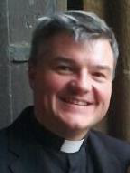
2012 was an extraordinarily momentous year: the Queen’s Diamond Jubilee, the Olympics, and, best of all, the Golden Jubilee of the Friends of Woodstock Parish Church! Another Golden Jubilee which meant a great deal to me was the 50th anniversary of the consecration of Coventry Cathedral, where I worked before coming here.
2013 doesn’t seem to have the same kind of historic feel as 2012. There are some very worthwhile anniversaries to celebrate, such as the centenary of the birth of one of my favourite composers, Benjamin Britten, and the quadricentenary (now there’s a good word) of the founding of the Bodleian Library. But as splendid as these are, they don’t quite come up to Diamond Jubilee/Olympic fervour.
But 2013, just like 2012, has exactly the same potential for you and for me, as individual human beings, as members of a community, as children of God. We have the potential to get things right, and get things wrong. We have the potential to be kind and generous, and to be selfish and spiteful. We can choose our words with care, wanting to encourage; or we can allow our tongues to get the better of us, which is always destructive.
And we have the potential to recognize that God is alive in Jesus Christ, despite the attempts of the Church to disguise the fact. We have the potential to realize that God is at work in each of our lives, if only we can muster the will and the grace to be aware of it. We have the potential to serve him, and others, before ourselves.
My prayer for each one of you is that 2013 will be the year you realize your spiritual potential. Speaking of which, here are some latter-day beatitudes from Bishop Alan of Buckingham – I hope they’ll provide some food for thought, as well as raise a wry smile:
• Blessed are those who can laugh at themselves; they will have no end of fun.
• Blessed are those who can tell a mountain from a molehill; they will be saved a lot of bother.
• Blessed are those who know how to relax without looking for excuses; they are on their way to becoming wise.
• Blessed are those who are sane enough not to take themselves too seriously; they will be valued most by those about them.
Happy New Year!
Adrian
December 2012
I remember a time when we only had one Advent Calendar. That’s not the case now in our family. First a kind grandparent buys the children one each and, being good Christians, they are of course nice nativity ones with pictures of camels and angels. Then the children spend their pocket money on the ones they really want that contain chocolate and have pictures of dubious characters like Sponge-Bob or The Simpsons. We’ve even been sent a computerised one with remote doors to fill a wintery scene with little kittens and snowy owls! Now each morning in Advent we have about 6 little doors to open before breakfast.
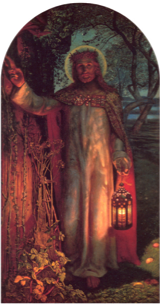
The image of the door is very evocative for Christians at Christmas. We think of Mary and Joseph wandering desperately from closed door to closed door trying to find somewhere for the baby Jesus to be born. They are eventually welcomed in by the inn-keeper - we all know the story. But the image of the door also brought to mind the wonderful painting, ‘The Light of the World’ by Holman Hunt, which hangs in Keble College. In it, Jesus stands outside a closed door and knocks, asking to be let in. It is based on the passage in Revelation: “Here I am! I stand at the door and knock. If anyone hears my voice and opens the door, I will come in and eat with him, and he with me.” It reminds us that Christ doesn’t push his way into our lives, but waits to be invited; he wants us to open the door to him.
The open door is such an important metaphor for the welcome of God and for that reason it is always sad when church doors are closed during the week. We are always delighted to see the numbers of people who pass through the doors of our churches each day, finding a place of peace, quiet and open-armed welcome.
And so this Advent, alongside opening all those little calendar doors, perhaps we might find some time and space to open the door of our lives to let Christ in. You may find that space by coming to Compline at 8.30pm in St Mary Magdalene’s every Wednesday during Advent; you may find that space in the quiet of your own home; or you may like to come and pray behind the doors of one our Churches: they are always open.
We wish you a blessed, joyful and happy Christmas.
Rev. Clare Hayns
November 2012
THE RECTOR WRITES
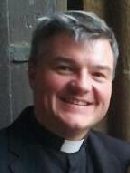
November is a month of saints and soldiers. November 11th, as well being Aermistic Day, is St Martin’s Day. The patron saint of Bladon, St Martin, is both solider and saint. This is his story:
Martin was born in 316 AD in what we now know as Hungary. He was soldier who, one day, encountered a beggar at the town gate. He found himself moved as never before and, in a dramatic gesture, removed his cloak, cut it in two, and gave half to the beggar.
That night, while he lay sleeping, he dreamt. In his dream, he saw the beggar, only this time he recognized him. It was Jesus.
Martin gave up being a soldier and became a servant instead, a servant of God. He was baptized, and ended up as Bishop of Tours in France, where his tomb can still be found in the rebuilt basilica.
At baptisms we pray that each child or adult will be Christ’s ‘soldier and servant to the end of their life’. Military language is far from fashionable in the contemporary church. And yet November gives us the opportunity to think about our soldiering and serving for Christ afresh.
I remember a hymn from primary school called ‘When a Knight won his Spurs’ – I wonder if you do too? Verse three begins like this:
Let faith be my shield and let joy be my steed,
'Gainst the dragons of anger, the ogres of greed.
That’s not a bad motto for us to adopt in the month when we remember the cost of fighting for the truth – both those who laid down their lives in war for our freedom, and the One who laid down His life that we might know faith, joy – and LOVE – as never before.
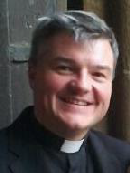
Canon ADRIAN DAFFERN
Rector
September 2012
Living Faith at St Mary Magdalene’s
Dear friends
Since I arrived in Woodstock two years ago I have formed a deep love for the both Bladon and Woodstock, and our beautiful churches. We are very blessed to have buildings that are, in so many ways, at the heart of our communities. They are rightly much loved and much treasured, not only by those who worship in them week in, week, out, but by those who have grown up with them, seen their loved ones christened, and married, and buried in them. Thousands visit our churches, and I am so glad that we are able to keep them open for everyone to enjoy.
Church buildings are just part of the story of course – were you taught that little rhyme when you were younger, the one that went
Here’s the church, here’s the steeple, open the door, here’s the people which involved wiggly your fingers from the church you’d made with your interlinked fingers? Well, that’s not only a cute little jingle, it’s good theology. And the Parochial Church Council at St Mary Magdalene’s have been working tremendously hard, under the aegis of a process in the Diocese of Oxford called Living Faith, to work out what God is calling us to do in Woodstock, the kind of church He wants us to be, so that we can worship Him in wonder, love and praise, and enable our whole town to find out what we have found out – that God is love, and that love is real, everlasting, and available to all.
So – back to the building. Our church, as you know, has undergone many changes over the centuries. Our reflections are that the present interior layout of the church has become too inflexible for our needs, not only for our worship, but also because of the increasing number of concerts, exhibitions, and other events that our schools and other groups use the building for.
After nearly two years of listening, praying, thinking and working, the PCC have agreed to experiment with some features of the internal layout of the nave of the church, namely
• To reconfigure 12 pews at the front of the nave and move the Lady chapel altar into a central space
• To create a focussed prayer space in the Lady Chapel
• To reconfigure the pews in the north aisle to create more social space
We aim to do this from early in October until the very end of March next year (Easter falls on March 31st 2013). This will give us time to get a feel of worshipping in and working with a different sense of space, and help us to begin a consultation exercise within the congregation and with the wider community about how we might develop and improve the church’s interior.
For many any notion of change to a much-loved space is a fearful thing, for others it will be a thrilling and exciting thing. Many – perhaps most – will be somewhere in between. I know that many in the town were deeply unsettled when the beautiful choir screen was moved, and I understand those feelings. I am by nature a conservative person, and change, though exciting, is not something that thrills me. So no-one need have any fears: we are going steadily and surely. No decisions have been made beyond the process outlined above, and whatever outcomes are discerned, I guarantee that the results will be exquisite. Only the best is good enough for God! So let me encourage you to come in and see what we are doing in October – come and worship with us on a Sunday, and get a feel for what is going on. Pray, reflect, and contribute to the process of consultation which will then ensue.
With my best wishes, and my prayers,
ADRIAN
July 2012
I wonder if you can think of a time or situation when you have felt really alive; when you knew that you were in just the right place at the right time?
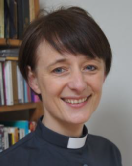
I felt a calling to the priesthood several years ago. It has been a long journey: endless interviews, a selection conference (never again!), theological college, and many essays (which continue as they work us curates hard in Oxford).
On June 24th (and by the time this goes to press) I will be ordained Priest and it feels as if I am in exactly the right place at the right time. Many people have asked me what difference being an ordained Priest will mean because, as those of you who read the Bible will know, we are all called to be priests, ‘to bring people to God and God to people,’ as Bishop Colin reminded us last week.
I believe that the particular role of the ordained Priest is to serve, support and encourage the ministry of all God’s people, through ‘word’ (preaching and teaching) and ‘sacrament’ (Eucharist and blessing). When the Bishop lays hands on my head next week during the Priesting service, I won’t suddenly become more spiritual, more learned or closer to God than anyone else. But being a Priest will enable me to follow my particular calling more fully and I am really looking forward to leading Eucharist services, which will be a great privilege. Throughout all of this I will remember that it has only been 18 years since women were able to be Priests in the Church of England.
I have been Curate here for one year now and have loved it. I’m learning a huge amount and there are lots of exciting things going on – Messy Church is thriving, children’s church is starting again at St Mary Magdalene’s in September and we will have a new colleague soon when Nathan Jarvis joins us as Team Vicar in October. I’m so pleased that that from July I will be full-time and we will be moving into the Benefice over the Summer.
I know I’m in just the right place at just the right time and feel fully alive because of it. It’s such a privilege joining in with what God is doing in Woodstock and Bladon.
Clare Hayns
June 2012
Dear friends
Last year in June I wrote about our church schools in Woodstock and Bladon. This year I am prompted to do the same by three recent events:
Bladon CE Primary School: two weeks ago I was there to speak to the older children about my visit to the Middle East in February. I showed them slides and talked to them about conflict, peace, reconciliation, and the realities of life in Israel/Palestine. The children were engaged, thoughtful, and mature; and they asked superb, intelligent questions.
The Marlborough CE School: last Friday the school hosted Radio 4’s Any Questions, and lots of Sixth-Formers were there amongst a lively audience in the Marlborough Enterprise Centre. There was a party afterwards for the panel, and some of the Sixth Form (I’d better say Yr 12 and Yr 13 to be spot on) came too. They buttonholed the speakers (including Vince Cable) with respectful, but feisty, penetrating questions – they were brilliant. Jonathan Dimbleby was hugely impressed with the students, as was I.
Woodstock CE Primary School: a pre-SATS breakfast yesterday morning, following a run round the field. The children were fun, polite, bright, full of promise. We prayed together that they would do their best in that days tests, and I know that they will.
I am so proud of the schools in Bladon and Woodstock. Last year I wrote: So be thankful for our church schools in these communities. Pray for teachers, governors, support staff, and for each other. And do remember our young people. They need our support and our prayers . After all, they are going to change the world.
It is extraordinary to think how much the world has changed in these last twelve months. Our young people need our prayers more than ever as they prepare for all that life will throw at them in the years to come. But we pray, not vaguely in a vacuum, but securely in the knowledge that Jesus Christ encourages us to be child-like.
So let us pray that innocence, wonder, curiosity and gentleness can be celebrated, not as aspects of youthful naivety, but as God-given gifts which are the only means of gaining an understanding of his love. And let’s be serious about cultivating those gifts if we are to grow closer to God, and in so doing, make the world a better place for our children.
With my love and prayers
Adrian
May 2012
GOD IN THE MIDST – GOD IN THE MESS
We have visitor’s books at the back of both St Martin’s and St Mary Magdalene’s. There are often lovely comments from our (thousands) of visitors. Sometimes there are comments which are peculiar, a bit batty, or even downright rude. Last month we had one at St Mary Magdalene’s visitor’s book which fitted the latter category to perfection – I quote:
“I am uncertain what Messy Church is, but the appearance of the building suggests you have accomplished it with admirable, if distressing, determination.”
It’s hard to know quite what our visitor was driving at. I doubt he was an architectural critic specializing in Blomfield’s later restorative work. I rather suspect his bugbear was that down one side of the church was a wonderful display of Easter bonnets made by children from Woodstock CE Primary School. Down the other side of the church was an equally wonderful display from students at The Marlborough CE School about images of Christ. The church was also set up for concerts by the Woodstock Music Society (they were fabulous). Plus there are lots of leaflets and books about Prayer and Christianity all over the place. Not to mention the corner of the church, well-loved and well-used, full of books and soft toys for children.
Messy Church is, in fact, our new act of worship for primary school-age children and their parents. We had the first one last month, 50 came, and it was brilliant. It takes place on the fourth Sunday of every month at 3pm, and you’d be very welcome. So that answers his first point.
But what of his second? What does he think churches are for? What do YOU think churches are for? Should a parish church fulfil Philip Larkin’s prophecy of a building representative of a dying institution
a shape is less recognisable each week, a purpose more obscure
or should it be what I think, and hope, we have in Bladon and Woodstock? Historic buildings yes, but not shrines preserved in aspic, but living buildings reflecting that we have a Living Faith. Places at the heart of their communities, for believer and non-believer alike. Places where our schools can mount exhibitions, and our choirs and orchestras make music. Places where our children are baptized, young lovers wed, and the grieving embraced when loved ones die. And most importantly of all, places of worship where, day by day, week by week, hundreds say their prayers, sing God’s praises, and receive His very self in bread and wine?
If that’s messy, give me that over neat and tidy any day.
And while it’s always dangerous to presume to know the mind of God, my reading of the Gospels suggests that Jesus probably prefers it that way too.
With my love and prayers
Adrian
April 2012
Since I last wrote to you I have been on the trip of a lifetime – my first ever visit to the Holy Land. I have been ordained for 20 years in June: 20 years of preaching and teaching about Jesus – and yet I had never been to the place where he was born (Bethlehem), the place where he grew up (Nazareth), the place where he was taught (Galilee), and the place where he died and rose again (Jerusalem) – until now.
It is hard to describe just how much this has affected me. I know that many of you have made this pilgrimage before me, and you will understand. All I can say is that for 20 years I feel as if I have been reading the Bible in black and white – whereas now everything is in colour. Even though so much of Israel/Palestine has changed in the last 2000 years, much remains the same. To walk where he walked, and to pray where he prayed – faith came alive for me in a new way, and faith, and life, will never be the same again.
So as we come to celebrate the events of Jesus’ Passion – the last week of his life and ministry, his entry into Jerusalem on Palm Sunday, the Last Supper, his arrest and torture, his crucifixion, his death, and – Alleluia! – his resurrection, I am excited. Excited because in our services in church in Bladon and Woodstock, hundreds of miles away from the places where these events actually happened, we too can draw close to Jesus in a new way.
Why should you bother? Because he did it all for you. And he longs for you to take a step towards him, to look at his face, to hear his voice, and to feel his touch. And if you wonder how on earth you might do any of that, or what it might mean, just come along to one of our services, or be brave and get in touch with one of us – we’d love to help you. Because we are very ordinary people who have discovered the most extraordinary thing – that when Jesus Christ is at the centre of your life, things make sense in a way that they never did before.
So why not come and worship with us this Holy Week and Easter? There’s no better time to discover the new life that comes from a living faith in Jesus.
With my love and prayers
Adrian.
March 2012
Rev. Clare Hayns
We have four boys, far too many toys and an array of pets. I often feel like King Canute attempting to hold back a sea of chaos. Teenagers don’t seem to be able to see towels strewn on the floor or half-finished mugs of tea piling up around them! A recent Radio 2 programme explained this as part of natural developmental processes so now they gleefully say to me: “Don’t blame me, blame my brain!”
Obviously one has to be hygienic, but I wonder whether the ability to live with a certain amount of chaos is actually quite a good thing. However well organised our lives are, the reality is that life is so often messy: we plan a trip out and the snow begins to fall; we arrange a meeting and sprain an ankle (as happened to me last week); we book a holiday and illness strikes.
Lent is a special time of prayer and reflection; a time to look inward at our lives and faith; a time to let go of some things that might keep us from following God. Perhaps our need for perfection and control might be one of these things? Can we trust God, even when life gets messy?
The Lent course this year (do come along) is based on the award winning film, The King’s Speech, which beautifully portrays the frustration of King George as his desire to speak perfectly was hampered by his speech impediment. With huge courage, effort and trust in his loyal long-suffering therapist he largely overcame his fears.
There is a wonderful moment at the end of the film when he speaks falteringly to the nation on the brink of war and you see the faces of the people who recognise the struggle and pain he has been through himself.
Jesus himself identified totally with the weakness, suffering and struggles of all people through His death on the cross.
All too often we feel that we must present perfection to the world, to others and to God. Maybe this Lent we can put our faith in God and allow Him to use us though the reality of our messy imperfections to show His grace to the world?
Feb 2012
The thermometer in my car tells me that it is -7C, and I know that it is working perfectly well. Hopefully, by the time you are reading this, it will have warmed up a bit – actually, let’s hope that it has warmed up a LOT.
Lent
With warmer weather comes the prospect of Spring, and that means that Christmas is long past, and Easter is on the way. In between comes Lent (‘The Springtime of the Church’s year) as I described in this paper last year. As usual the church will be trying to help people get the most of the season of Lent – a feast of fasting, if you can bear the tautology. Fasting from indulgences of all sorts of kinds, in order to create some space to travel inside our own souls, to reflect on what makes us tick, on what really matters; to go deeper and, hopefully, to grow deeper.
These are spiritual things, and I write about them without any sense of shame. Far from it – it is only when we take our spiritual selves seriously that we understand ourselves and others, and have the potential to be the person that God longs for us truly to be.
An Hour Out
So alongside all the services, events, occasions and opportunities that the church will provide for you this Lent (see our notice boards and website for details) I want to offer an hour to anyone in this community who wants to talk about their own experience of God – your spiritual journey. Lent would be a great time to this, but the offer stands for the whole year. You are welcome to email me, fix a time, and come and talk – not about ‘church stuff’, simply to talk about your faith (or lack of it), about prayer, about the Bible, questions you’ve always wanted to ask, but have never dared.
The offer is there, to all of you, during Lent, or at any other time this year. My undivided attention for one hour, for you to say whatever you like, and know that you are taken seriously, listened to, and loved by God. I hope you’ll get in touch. And I hope that, if you’re feeling brave, you might even dip your toe in the water of one of our services, or groups, or activities – you’ll be very welcome.
Have a holy and happy Lent – a great time for a spiritual Spring Clean. A great time to take an hour out – for you. For God.
Adrian
Jan 2012
Rev Shaun Henson
As I write this letter, darkness has fallen. It is night in a time of year when daylight is always limited, making the light from the Sun seem ever more precious. Yet even in this dark and cold time the light does come faithfully each morning, often beautifully. It reveals not only the same admirable landscape we knew the day before, but brand new things with each new day, including fresh opportunities and experiences ahead.
In winter’s midst, this is also the season of Epiphany! As the meaning in Greek indicates, ‘epiphany’ is about the showing or manifesting—the revealing if you will--of Christ’s glory in the world. Epiphany is an unveiling to all that God really is somehow present in and through Jesus Christ, just as the Church claims.
The ancient Syrians called the feast of Epiphany denho, meaning ‘up rising’. They had in mind the lovely notion of ‘rising light’. At Christmas, we heard from Isaiah that ‘the people walking in darkness have seen a great light’. We hear from Isaiah again in Epiphany telling us of God sending a light to the Gentiles—a light to all the nations of the world, including ours!
This common theme of light and darkness appears throughout the Bible, from the words of its prophets, priests, and preachers. The idea is simple: humanity, in some mysterious spiritual sense, is in a kind of spiritual darkness; we can neither see, nor hear, nor understand the things of God without God’s grace, which is God’s divine help. Spiritual knowledge is portrayed in this model as a special type of knowledge, unlike any other in its unique hidden character. It is like all other knowledge in that one must press in to understand it, and must be tutored in it. The tutor with God’s knowledge is God Himself. Jesus makes us able to see and hear and understand, by his ever-present Spirit. What an experience to be taught by God, and what an opportunity that this is open to all!
From the foundations of the great European and British universities it was considered that human beings, made in God’s image, are forever spiritual creatures. We cannot disconnect ourselves from our spirits—try though we might—and we must therefore explore and nurture our spiritual selves whilst nurturing also our minds. Each new year comes with opportunities to do both together. And that’s my goal for the coming year.
As I end this letter, the sun has risen once again; it is no longer dark. The light is particularly beautiful, in fact, revealing a creation frosted with the frozen dew of winter, glinting like so many diamonds. Spiritual daylight and even daily hope can seem limited in our world, and in our lives; yet it never really is. Darkness passes; light shall come again; God is faithful, an ever present help come what may. May the Son shine faithfully into each of our lives this year, as we press into it open to the light of God, expectant, and willing afresh to be tutored by God’s very presence. With God—all things being possible—may the new year bring each of us fresh and exciting opportunities in every aspect of our lives.
With God a new day is always dawning, and every year is afresh with new possibilities. Look, the light is rising! The Son is shining – and what a happy new day, and a Happy New Year 2012 can be.
Shaun
© 2012 Design by OPUS Editorial | Contact the Benefice of Blenheim